
     All resources
    Free guide · PDF

    How should a charity get started with digital fundraising?

    Build in four layers: measure gifts by source and device, fix the donation page for phones, grow an email list with a planned welcome and second ask, and only then buy traffic. Compare each layer with published benchmarks, then run one randomised test at a time with a measure chosen in advance.

    Print view
    • Free PDF, yours to keep
    • 11 cited sources
    • No cost, no sales call required
    Free PDF · digital-fundraising-starter-guide.pdf
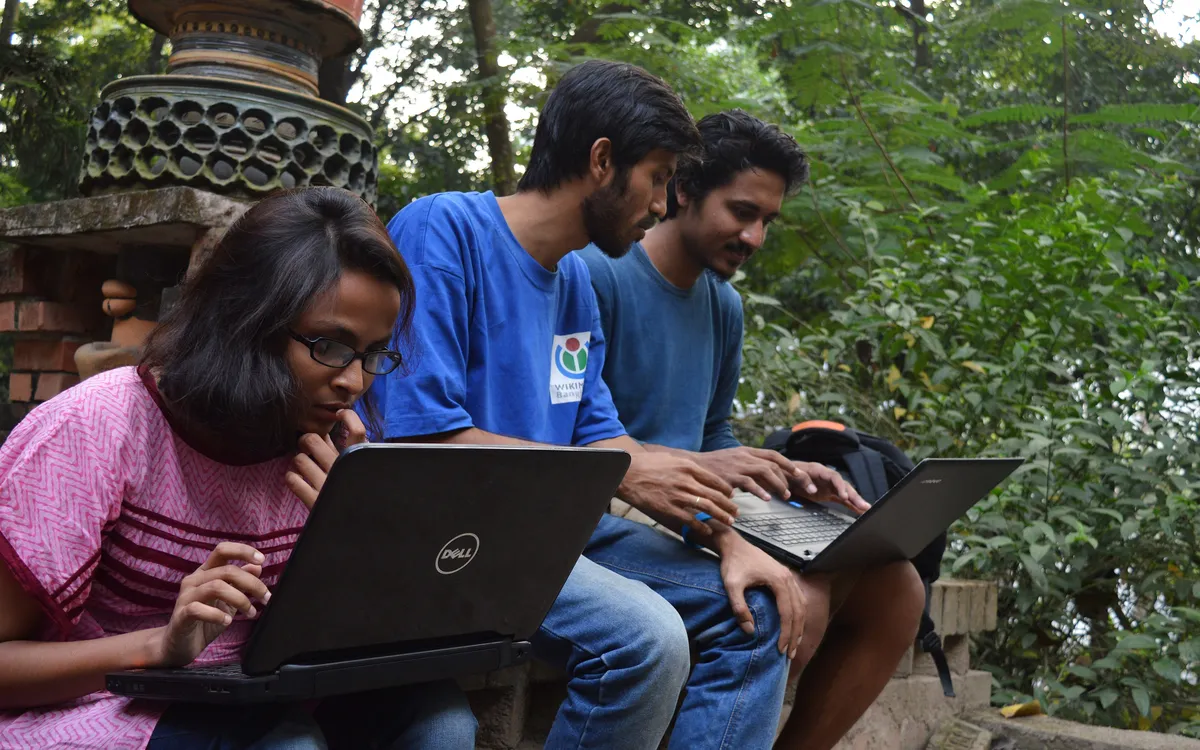
    Fundraising team at work, illustrating the digital fundraising starter guide
    Preview from the PDF
    “A starting plan for digital fundraising at any size, built on M+R Benchmarks 2026, FEP retention data and published field experiments. It covers the order of work, a 90 day plan, twelve tests, four NextAfter experiments to rerun on your own site and the email consent rules in four countries.”
    Key takeaways
    • Measure gifts by source and device, then fix the donation page for phones
    • Rerun published tests, such as fewer form fields, on your own donation page
    • Test one change at a time with a random split and a measure set in advance
    Inside the download

    What the guide gives you

    5 practical tools and actions included in the PDF.

    1. A baseline of your own email, donation page and monthly giving numbers against current benchmarks

    2. A 90 day plan matched to your team size

    3. A prioritised list of tests, each with a hypothesis, a measure and a log entry

    4. Four published experiments you can rerun on your own donation page and emails

    5. A clear view of the email consent rules in your country

    Enter your name and email to download the PDF and receive an email copy.

    Is this for you?

    You will get the most from this if:

    Built for these roles and fundraising challenges.

    • Small charities where one or two people run all digital work
    • Mid-sized organisations with digital activity that is not yet paying back
    • Larger teams setting a testing programme and a shared order of work
    Canada, US, UK, Australia

    Rules where you fundraise

    Digital fundraising works the same way in every country. The rules for sending fundraising email do not. Check your country before you grow your list.

    Canada

    United States

    United Kingdom

    Australia

    • The ACMA expects senders of marketing messages to have consent, to identify themselves as the sender and to make it easy to unsubscribe. Keep a record of who gave consent, when and how.

      ACMA, Avoid sending spam

    Email rules change. Confirm your own situation with a qualified adviser in your country before you send.

    Evidence

    Sources behind this resource

    Read the studies and guidance behind the recommendations.

    1. M+R Benchmarks 2026 reports that fundraising emails had a 0.59% click-through rate and a 0.05% response rate, and raised $54 for every 1,000 sent, in 2025 activity at participating US nonprofits.

      M+R, Benchmarks 2026, Email Messaging
    2. On primary donation pages, 11% of desktop visitors and 8% of mobile visitors completed a gift. Mobile users supplied 52% of website traffic but 28% of revenue.

      M+R, Benchmarks 2026, Website Performance
    3. Monthly giving accounted for 27% of all online revenue in 2025, and 37% of online revenue arrived in December.

      M+R, Benchmarks 2026, Fundraising
    4. Among donors who were new in 2024, 18.9% gave again in 2025, compared with 59.3% of repeat donors.

      Fundraising Effectiveness Project, 2025 Q4 Retention by Donor Type
    5. In a field experiment with more than 50,000 prior donors, a matching offer raised revenue per solicitation by 19% and the probability of giving by 22%; 2:1 and 3:1 matches did no better than 1:1.

      Karlan and List, NBER Working Paper 12338
    6. Google Ad Grants gives eligible nonprofits up to US$10,000 a month in in-kind search advertising.

      Google, Ad Grants Program FAQ
    7. The Charity Digital Skills Report 2026 found that 28% of UK charities have a digital strategy in place.

      Charity Digital Skills Report 2026
    8. Care Net removed a comments box, a cover-the-fee option and a give-on-behalf option from its donation form in 2020. Conversion rose from 26.1% to 54.1% at 99.3% confidence, across 83 visitors.

      NextAfter, Experiment #32781
    9. In 2017, CaringBridge replaced a six-button gift array with an open field and a $10 minimum on its main donation page. Conversion rose from 3.3% to 7.4% across 785 visitors.

      NextAfter, Experiment #6700
    10. Focus on the Family rolled out a monthly gift pop-up, shown after a donor clicked to give, across all its donation pages in 2018. Recurring donor conversion rose by 24.3%, from 0.50% to 0.62%.

      NextAfter, Experiment #6147
    11. In a 2016 test across 29,389 recipients, adding a first name to a National Breast Cancer Foundation email raised the click rate from 0.19% to 0.72%.

      NextAfter, Experiment #2759
    FAQ

    Common questions

    Will the NextAfter results work on our site?

    Not necessarily. They were run with US charities between 2016 and 2020, and NextAfter's own tests show a winning change on one page can lose on another. The guide sets out how to rerun each one with your own donors and a measure chosen in advance.

    Should we start with paid ads?

    Usually not. Ads send people to your donation page and email sign-up, so fix those first. Once you can see what visitors do when they arrive, paid or in-kind traffic such as Google Ad Grants becomes far easier to judge.

    How many gifts do we need before a test means anything?

    More than most small charities expect. If a page receives only a few dozen gifts a month, test bigger changes, run them longer, and treat close results as unproven. The guide explains how to set a measure and a stopping point before you start.

    Are the benchmarks targets for our charity?

    No. They describe the organisations that took part, mostly in the US. Use them to find the weakest link in your own numbers, then compare yourself with your own past results.

    Does the guide give legal advice on email consent?

    It summarises the official rules in Canada, the US, the UK and Australia and links to each source. Check your own situation with a qualified adviser in your jurisdiction.

    Keep reading

    Related resources

    Keep working on the same fundraising challenge.

    Built on the same evidence

    Use this guide to build a four-stage funnel from cold traffic to first gift. You get a five-email nurture sequence, landing page benchmarks, and M+R and NextAfter data so you can find your weakest stage and fix it before spending more on ads.

    Read the guide
    Another free guide

    Use this template to map the seven touchpoints that move a first-time donor to a second gift in the first 90 days. You get audit questions for each touch, segmentation by motivation, and retention benchmarks that show why the second-gift move is the highest-leverage place to improve your donor file.

    Read the guide
    Another free toolkit

    Run it as four blocks: build the offer and the tracking, ship a page that makes the recurring ask clearly, then move your existing file into the programme, and finally fix retention and card recovery before you spend on acquisition. Monthly gifts are the retention lever your team actually controls, and in Canada the operating details matter, from cumulative receipting to Payments Canada Rule H1 obligations for pre-authorized debits.

    Read the toolkit

    Get the guide, free

    11 cited sources, written for teams doing this with the staff they already have. No cost, no sales call.

    Need help putting this into practice?

    Share your fundraising priority. Our senior team can build the plan, run the work and report on progress.

    We use your details to respond to this inquiry and to send occasional fundraising insights. You can unsubscribe from any email we send.